

Get vaccinated
EN | FR
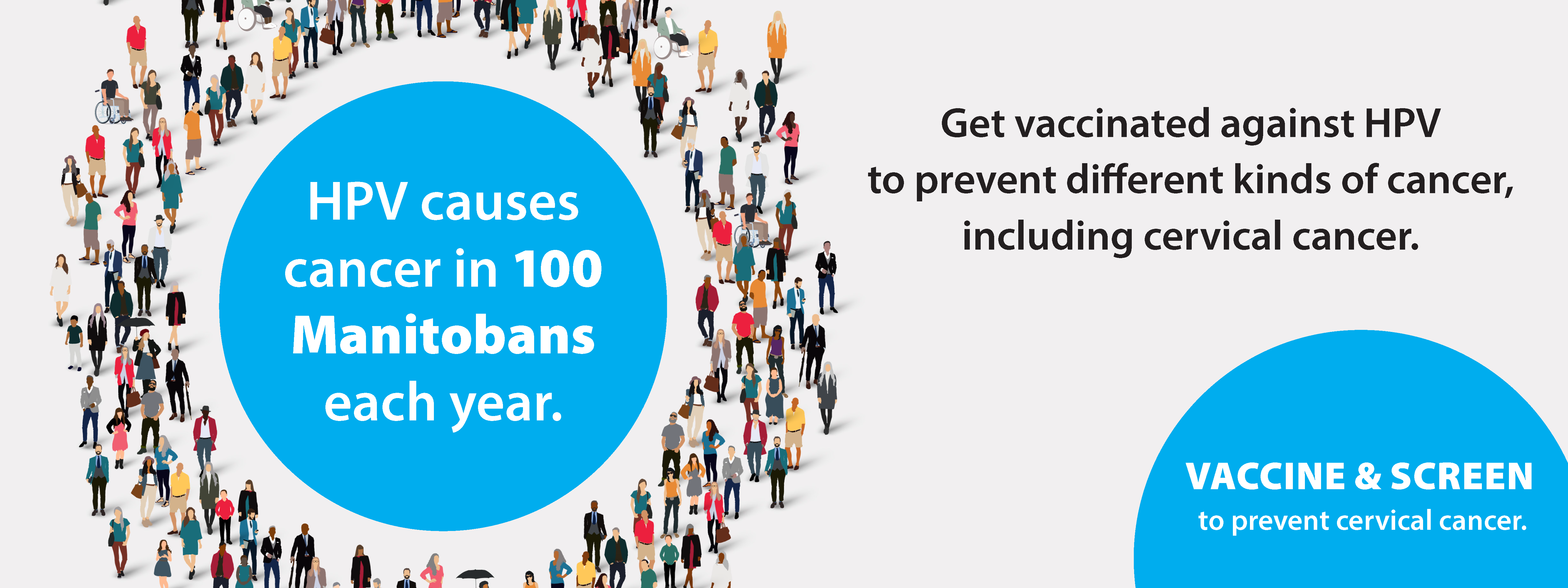
What is HPV (human papillomavirus)?
HPV is the most common sexually transmitted infection in Canada. About 80% of people will have an HPV infection in their lifetime.
HPV can infect several parts of the body in both females and males. It is spread through past or current sexual contact that is wanted or unwanted. Sexual contact includes:
- skin-to-skin contact between any two people of the oral, anal, or genital areas, and
- sex with shared sex toys.
There are some high-risk types of HPV. Most people show no symptoms of it.
How can you prevent HPV?
Get vaccinated against HPV. The most common types of HPV and many of the related cancers can be prevented with getting the HPV vaccine. Health Canada has approved a vaccine and Manitoba has a provincial immunization program that provides free HPV vaccine to those who are eligible.
What are the benefits of the HPV vaccine?
The HPV vaccine can prevent,
- a variety of cancers,
- pre-cancer (abnormal cells), and
- genital warts.
The HPV vaccine is safe. Some people report pain and swelling at the injection site, but no serious events have been reported. The vaccine does not cause an HPV infection.
HPV vaccine protects against nine types of HPV, all of which can cause cancer or genital warts. The vaccine works best if it is given before someone is exposed to HPV, but it can also benefit people who have already had sexual contact or an abnormal Pap test.
Which cancers can be prevented?
Most HPV infections clear on their own and will not develop any symptoms or health problems. There is a risk that an HPV infection may become long-lasting and could lead to cancer. According to the World Health Organization, there are more than 100 types of HPV, out of which about 14 are cancer-causing or high-risk types. High-risk HPV causes nearly all cervical cancers. It is also linked to cancers of the:
- mouth,
- throat,
- anus,
- vagina,
- vulva,
- penis, and
- head and neck.
As an example, we could prevent around 5,000 cancer cases in 2042 if all Canadian children are vaccinated against HPV, starting today.
HPV infection with low-risk HPV types can cause warts on the vulva, urethra, cervix, vagina, penis, scrotum, anus or thighs. Although warts are rarely related to cancer, they can affect physical, social, and emotional wellbeing.
What can you do to prevent getting HPV and reduce cancer risk?
To help prevent getting HPV and to reduce cancer risk:
- Get the HPV vaccine. Talk to your healthcare provider, pharmacist, or public health nurse to see if you are eligible.
- Get your children vaccinated through the school-based program or a healthcare provider. Click here to learn more about Manitoba’s Immunization Program and who is eligible for a free vaccine. Health Canada recommends HPV vaccination for children nine years of age and older.
- Get screened for cervical cancer every three years. Most women who have ever had sexual contact should have a Pap test every three years. Trans, non-binary, and gender diverse people with a cervix should also be screened regularly.
- Limit your number of sexual partners. The more sexual partners you have, the higher your risk of getting HPV. Having one long-term sexual partner is another way to reduce your risk, but it does not eliminate your risk of HPV.
- Practice safer sex. If you are sexually active, using a condom may reduce your risk of getting HPV. Remember the areas of skin that are not covered by the condom are not protected.
- Make informed decisions about your sexual health. Talk to your partner(s) about their sexually transmitted infections status, their number of partners and the use of protection.
- Live smoke free. Smoking makes the body weaker to fight off HPV infection and contributes to the development of several cancers and genital warts.
Programs and Services
HPV vaccination messages to parents
Cervical Cancer Survivor, Winnipeg, age 42 (diagnosed at age 39)
My world was turned upside down when I was only 39 years old and told that I had cancer. I'm currently in remission and want you to know that as a parent of a 10 year old little girl, I would never want to see her suffer the way I did. You have the opportunity to prevent unnecessary pain and hardship for not only your child, but for your entire family too. Please, don't chance it, vaccinate your child against HPV, it could save his or her life.
Anita, Morden, MB
What I would really love for parents to know is that I lost someone I loved dearly because of cervical cancer. She was someone who was with one partner her entire life, in a committed relationship. Her faith was really important to her. But she still had HPV and because of that she died at the age of 39. Had this vaccine been available to her when she was in grade 6, she would still be here to raise her girls.
Manitoba Health Recommended Immunization Schedule
To help prepare your child to manage the feelings and sensations they may experience on vaccine day, check out the resources produced by The Hospital for Sick Children:
- The CARD System Student handout (pdf)
- Preparing children for school vaccinations: A parent's guide(pdf)
If you have questions about the HPV vaccine, you can contact Manitoba Health at [email protected]
Brandon & Winnipeg: Sexuality Education Resource Centre (SERC)
Health Canada:
CancerCare Manitoba:
Manitoba Health:
- Frequently Asked Questions: Manitoba's School Immunization Program - For Parents (pdf)
- Human Papillomavirus (HPV) Factsheet (pdf)
- Immunization (Vaccination)
- Manitoba’s Immunization Program
The Society of Obstetricians and Gynecologists of Canada:
What is hepatitis B?
Hepatitis B is an infection or inflammation of the liver caused by the hepatitis B virus (HBV).The hepatitis B virus is usually spread through infected blood from sharing unsafe needles or body fluids during sexual contact.
What are the benefits of getting vaccinated against hepatitis B virus?
Hepatitis B can be prevented with a vaccine. Manitoba provides free hepatitis B vaccine to those who are eligible. The hepatitis B vaccine is highly effective and can protect against scarring of the liver or permanent liver damage, which can lead to liver cancer.
Which cancers can be prevented?
Most people do not experience any symptoms when they first get hepatitis B virus. Symptoms can take two to six months to appear and only about half of people infected develop symptoms. Symptoms can include:
- jaundice (yellowing of the skin),
- fatigue,
- loss of appetite,
- dark urine,
- pale stools, and
- long-term liver complications, such as cirrhosis (late stage scarring of the liver) and liver cancer.
Hepatitis B virus is a long-lasting infection that increases your chance of getting liver cancer. The risk of getting liver cancer is even higher if you have been infected with both hepatitis B and C viruses. Infection with hepatitis B virus and hepatitis C virus (HCV) also increases the risk of bile duct (thin tubes from the liver to the small intestine) cancer and some types of non-Hodgkin lymphomas (cancer that starts in your lymphatic system and can cause white blood cells to grow abnormally).
As an example, around 1,800 cancer cases could be prevented by 2042 if fewer Canadians were infected with hepatitis B and hepatitis C starting today.
What can you do to prevent getting hepatitis B virus?
To help protect you against hepatitis B virus and to reduce your risk of cancer:
- Get the hepatitis B vaccine. There is a safe and effective vaccine available to prevent you and others from the virus. Have your children vaccinated through school-based programs or catch-up programs. Click here to learn more about Manitoba’s Immunization Program and the eligibility criteria.
- Use a condom to avoid some exposure to blood and body fluids during sex.
- Protect yourself from infected blood and other body fluids. Avoid sharing razors, needles, drug solutions or water, filters, cookers, and other drug related equipment.
- Avoid dental, medical or cosmetic procedures that enter the skin, such as transfusions, acupuncture, piercing or tattooing unless you are certain that the needles are new and sterile.
- Wear latex gloves if you are likely to be in contact with someone else’s blood or body fluids.
- If you think you are at risk or may be infected with hepatitis B virus, talk to your healthcare provider about the hepatitis B vaccination as well as testing and treatment for the virus.
Here are some programs and additional resources to help you get vaccinated against hepatitis B virus.
Programs and Services
Brandon & Winnipeg: Sexuality Education Resource Centre (SERC)
Manitoba Health Links – Info Santé
Manitoba Sexually Transmitted Infections (STI) Clinics
Prairie Mountain Healthy Sexuality
Winnipeg Healthy Sexuality & Harm Reduction
Winnipeg Klinic Community Health Drop-In Services
The Society of Obstetricians and Gynecologists of Canada:
Manitoba Health:
Visit www.cancercare.mb.ca/screening/resources to order resources for your clinic.
For more information please contact:
CancerCare Manitoba
Phone: (204) 787-2197
Toll-free: 1-866-561-1026
Copyright © 2000-2019 CancerCare Manitoba.
All Rights Reserved.